Integrity of identity: Audre Lorde and danah boyd
[tldr: inconclusive and poorly-explained ramble on identity and roleplaying]
I’m belatedly discovering Audre Lorde, reading my way through her collection “I am your sister. It’s touching and inspiring, and I agree with most of it. But here’s one aspect I’m struggling with.
Emotional consistency is supremely important to Lorde. You should be the same person with your family, with your friends, at work, with your lover or before the police:
In order to make integrated life choices, we must open the sluice gates in our lives, create emotional consistency. This is not to say that we act the same way, or do not change and grow, but that there is an underlying integrity that asserts itself in all of our actions.
None of us is perfect, or born with that integrity, but we can work toward it as a goal.
In Lorde’s life, that integrity was what allowed her to be unapologetically herself. She was fighting against silence — the silence that comes from subduing your identity to fit into society, and the silence of fear and self-censorship that stops you trying to break through it:
The women who sustained me through that period were Black and white, old and young, lesbian, bisexual, and heterosexual, and we all shared a war against the tyrannies of silence…
What are the words you do not yet have? What do you need to say?
What are the tyrannies you swallow day by day and attempt to make your own, until you will sicken and die of them, still in silence? Perhaps for some of you here today, I am the face of one of your fears. Because I am woman, because I am Black, because I am lesbian, because I am myself—a Black woman warrior poet doing my work—come to ask you, are you doing yours?
And of course I am afraid, because the transformation of silence into language and action is an act of self-revelation, and that always seems fraught with danger.
Everything we are should permeate everything we do. Lorde condemns — albeit with gentleness and sympathy — anything that puts part of our life into a box. This comes up, for instance, in her discussion of BDSM (something I hope to return to another time):
I feel that we work toward making integrated life decisions about the networks of our lives, and those decisions lead us to other decisions and commitments—certain ways of viewing the world, looking for change. If they don’t lead us toward growth and change, we have nothing to build upon, no future.
Through all this the question I’m struggling with is:
must
we have only one identity, at least as the ideal state of self-actualisation? I would like to declare “
I am large, I contain multitudes
“. I’d like to play different roles without needing to merge them into one identity.
And — politically speaking — I believe there is value to this. The “world of work” is now breaking it’s 9-to-5 bounds, asking us to blend our employers’ needs into every moment of life. Increasingly, our work is also “affective”; requiring not just our minds and muscles, but our hearts as well. On the internet, social networks threaten to achieve Lorde’s aims by force — giving us an integrated identity whether we want one or not.
So now, if we behave with “integrity”, it means letting the areas where we are not free dictate our behaviour even when we are free. If I must be non-threatening at work, I must be non-threatening everywhere; for in this world without boundaries, my behaviour anywhere will be linked back to my work. Every compromise or self-denial we make in one context becomes expanded.
The excape from this is to divide our identities. danah boyd has been tracking this for a decade, looking particularly at teenagers. She and her subjects regard “collapsing contexts” — visibly connecting different facets of an identity — as a threat to wellbeing, perhaps even an act of violence against chosen identities.
Because when, for example, Google links a youtube profile to a real name, it performs a kind of outing. Whatever identity has been growing in the shadows is exposed to the full force of external scorn.
So Lorde’s prescription of consistency seems at odds with the human need for gradual, fallible self-discovery. Proclaiming her identity was an act of courage then, as it would be now. But perhaps we also need more space for people to develop and discover their identities, without immediately needing to justify them to everybody they know.
Clay Shirky on Chinese hardware hackers
Clay Shirky talks about hardware hacking in China, particularly in comparison to the US “Maker movement”.
The maker movement is akin to the idolisation of the countryside which followed urbanisation. Consciously or not, it’s recreation of a culture which has been lost. In this case, the “hardware hacking” culture has been destroyed by a few decades of cheap imports and complicated devices. By contrast, stereotypically “female” making has not been interrupted, so there is no need to rediscover it in the same way.
Maker culture is largely male culture in part because men are celebrating our triumphant return to a set of practices women never let go of in the first place. One of the reasons Craft never found an audience is that that audience had never been lost; Ravelry and Pinterest and Etsy do a good chunk of what Craft was meant to do, and without any of the “We here in the Maker movement could not be more pleased with ourselves” vibe.
So, tangent managed, here’s the analogy. Hardware hacking in the US vs. China is a bit like Maker culture between men and women. Hardware hacking hasn’t become a hot new thing in China because it never stopped being a regular old thing.
There’s much more of interest in the article; I think it’s also the first worthwhile thing I’ve found on ello.
devolution
The Scottish independence campaign was, and is, a massive popular movement.
But the post-referendum devolution wrangling is a depressing case of gerrymandering writ large.
So the tories want “English votes for English laws”, because they reckon they can get a majority in England more often than not. Labour want regional devolution, to stop the Tory South-East imposing itself on the rest of the country. Meanwhile the (non-Scottish) voters don’t care — and who can blame them, given the way all parties treat them?
Also: Alex on how this will get decided in a back-room deal during wash-up
Linus on welcoming small patches
Somebody asks whether it’s worth submitting trivial patches to the Linux kernel, considering that it makes work for somebody else to merge them. Linus’ response is perfect:
To me, the biggest thing with small patches is not necessarily the patch itself. I think that much more important than the patch is the fact that people get used to the notion that they can change the kernel – not just on an intellectual level (“I understand that the GPL means that I have the right to change my kernel”), but on a more practical level (“Hey, I did that small change”).
…
So please don’t stop. Yes, those trivial patches _are_ a bother. Damn, they are _horrible_. But at the same time, the devil is in the detail, and they are needed in the long run. Both the patches themselves, and the people that grew up on them.
Brackets and codpieces
Another good bit from the Etymologicon [
previously
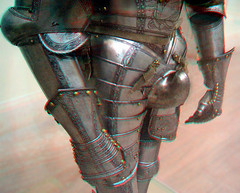
]. This time, why brackets are named after codpieces. The ever-more-elaborate codpieces in medieval armour were called
braguettes
.
A Braguette
Then came an architect fixated on groins
What do you call the bit of stone that bulges out from a pillar to support a balcony or a roo? Until the sixteenth century nobody had been certain what to call them; but one day somebody must have been gazing at a cathedral wall and, in a moment of sudden clarity, realised that the architectural supports looked like nothing so much as Henry VIII’s groin.
So the supports became known as
braguettes
, which first became
brackets
in a dictionary compiled by Pocahontas’ lover. Then, because a double bracket looks a bit like [, the word was transferred onwards to name a piece of punctuation
Those never-admitted European ransom payments
The Anglophone media has recently been making
noises about European governments making ransom payments to kidnappers.
It’s interesting that this has taken on the status of accepted fact — while, as far as I can tell, no European government has officially confirmed it. On the one hand I’m pleased that the media has the courage to report government actions without a press release. On the other, I’m a little nervous about how much this seems down to co-ordinated briefing by American officials. True it may be, but it’s apparently a truth only reported when it suits the powerful.
At the very least I’d hope that European journalists would browbeat officials into either confirming or denying the American (and British) official claims of ransom payments.
ETA: This New York Times article on the topic is pretty impressive, though, and obviously based on a lot of research.
KRG oil in Texas
The slow progress of oil tankers makes for a nice change from the jackhammer pace of news. Disputes about Kurdish oil exports have been pottering along for months, following the movement of a few tankers around the world.
So we have the SCF Altai, which has apparently been running oil between Ceyhan and Israel since June.
And across the Atlantic there’s the United Kalavrta, which has been loitering off Texas while Iraq and Kurdistan slug out ownership rights in court. Once the court ruled against Iraq, the tanker promptly turned off its tracking beacon, and is now presumably unloading as quietly as possible.
ISIS’s new German-made missiles
Germany has, after much soul-searching, decided to supply weapons to Kurds fighting against ISIS.
It must be slightly awkward, then, to discover that ISIS already have German weapons
Eliot Higgins identifies these as HOT anti-tank missiles, made by a Franco-German consortium called Euromissile. 1000 of them were sold to Syria in the late 70s — officially by France, though Germany was deeply involved in the manufacture, and would have been consulted about the sale.
Embarrassingly, these HOT missiles are close cousins of the MILAN missiles, which Germany will now be giving to the Kurds. So Germany, usually one of the better-behaved arms exporters, gets the cachet of arming both sides with more-or-less the same weapons. Oops.
In fact, selling these to Syria was controversial at the time in Germany. Not only did it break Germany’s rules on not arming “areas of conflict” — but since the conflict in question was between Syria and Israel, it caused strong protests from Israel. The German excuse was that, despite their German components, these were a French responsibility:
Government sources said missile exports to France were legal, provided the necessary government export permit was obtained, but once the items were in France, there was no ban on the re-export of the items to third countries.
This fit into an ongoing pattern by which Germany used France as the scapegoat for its weapons sales:
In a government agreementconcluded in 1972 Bonn and Paris agreed to interpretand apply their countries’ weapons export law “in the spirit of German-French cooperation.”
A little after this sale, Germany went even further in sidestepping responsibility:
Under SPD [Social Democratic Party of Germany] Chancellor Helmut Schmidt the Federal Government stipulated in 1982 that German parts for “Roland,” “Hot,” and”Milan” that were incorporated in the weapon in France “will be treated as goods of French origin.” They simply turned into French parts that are not subject to German export control. Thus, German consciousness remained unburdened.
[based partly on research by Charles Lister and Brown Moses]
Market Basket
Jacobin on industrial action at supermarket chain Market Basket, as workers demand the reinstatement of a CEO who treated them well:
25,000 store employees are still showing up for work, while at the same time asking customers to boycott Market Basket. They are demanding the reinstatement of their recently fired CEO, Arthur T. Demoulas, deposed by his cousin, Arthur S. Demoulas. Arthur T. is an atypically benevolent corporate head.
…Market Basket workers are doing what is generally unthinkable in the precarious service economy: exerting their power as workers and risking their paychecks for their pride, good benefits and pay, and vision of how their workplace should operate — without the encouragement or protection of a union.


Leave a Reply