Alte Pinakothek

Aside from the portrait of Mlle Ferrand, my visit last week to Munich’s Alte Pinakothek gallery was underwhelming. Much of it left me cold – the kind of coldness where I can’t tell how much is about the artworks themselves, how much they are just reflecting my own apathy.

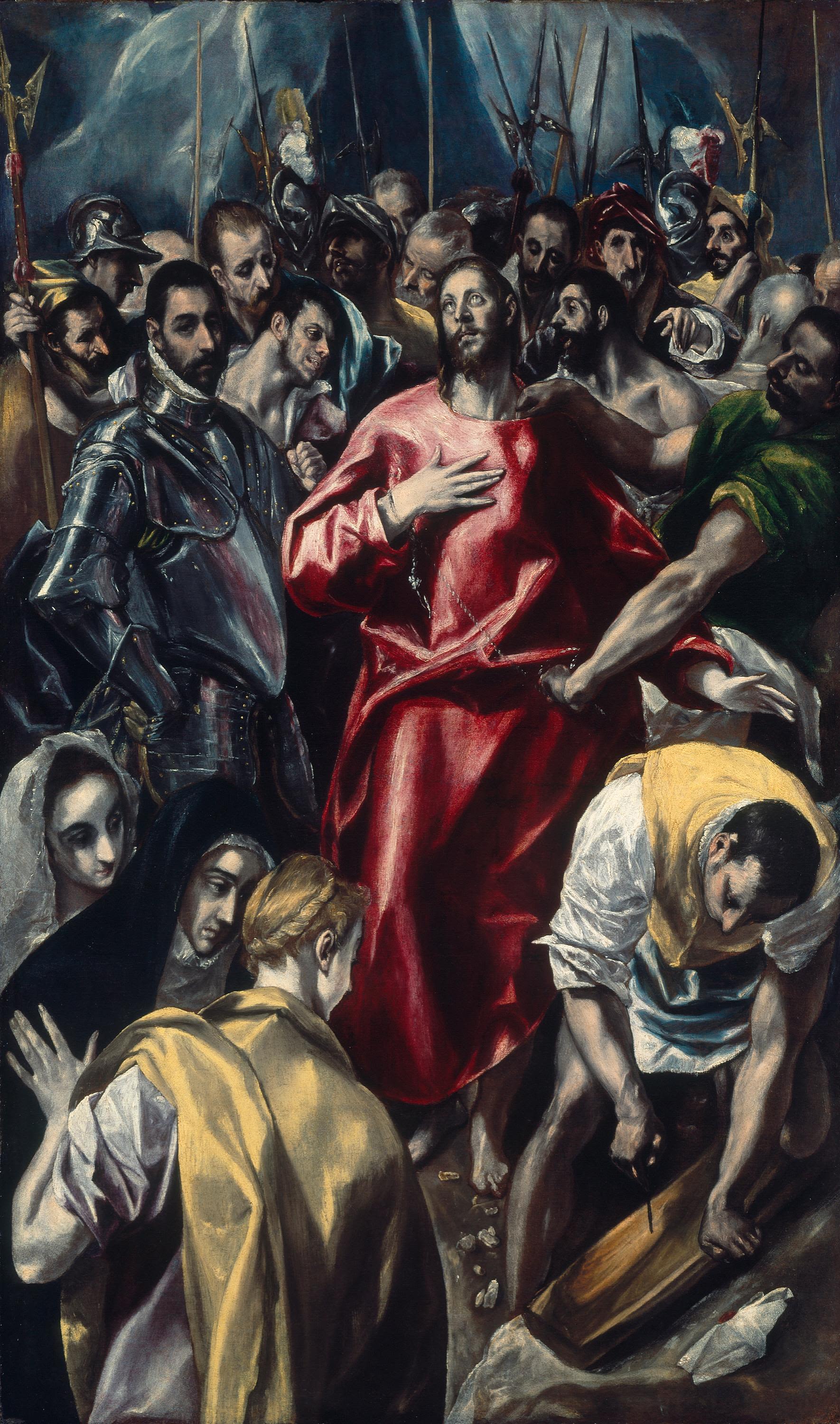
Perhaps it’s because, visiting en route to a Nick Cave concert, I was primed for the melodramatic intensity of a Caravaggio or a Delacroix. Even the lashings of Christian gore — which you might expect to align with Cave — somehow felt too neat and orderly. I almost sighed with relief when I reached the one El Greco. Compared to its environment it feels brighter, bolder, larger than life:

The disrobing of Christ

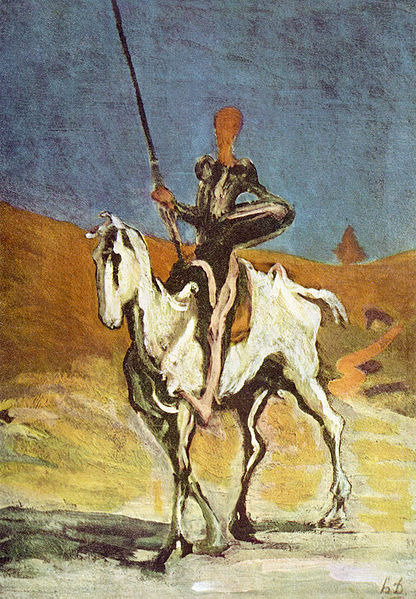
It took until the 19th century for me to get a similar vibe, this time from Daumier’s Don Quixote:

Don Quixote, Daumier

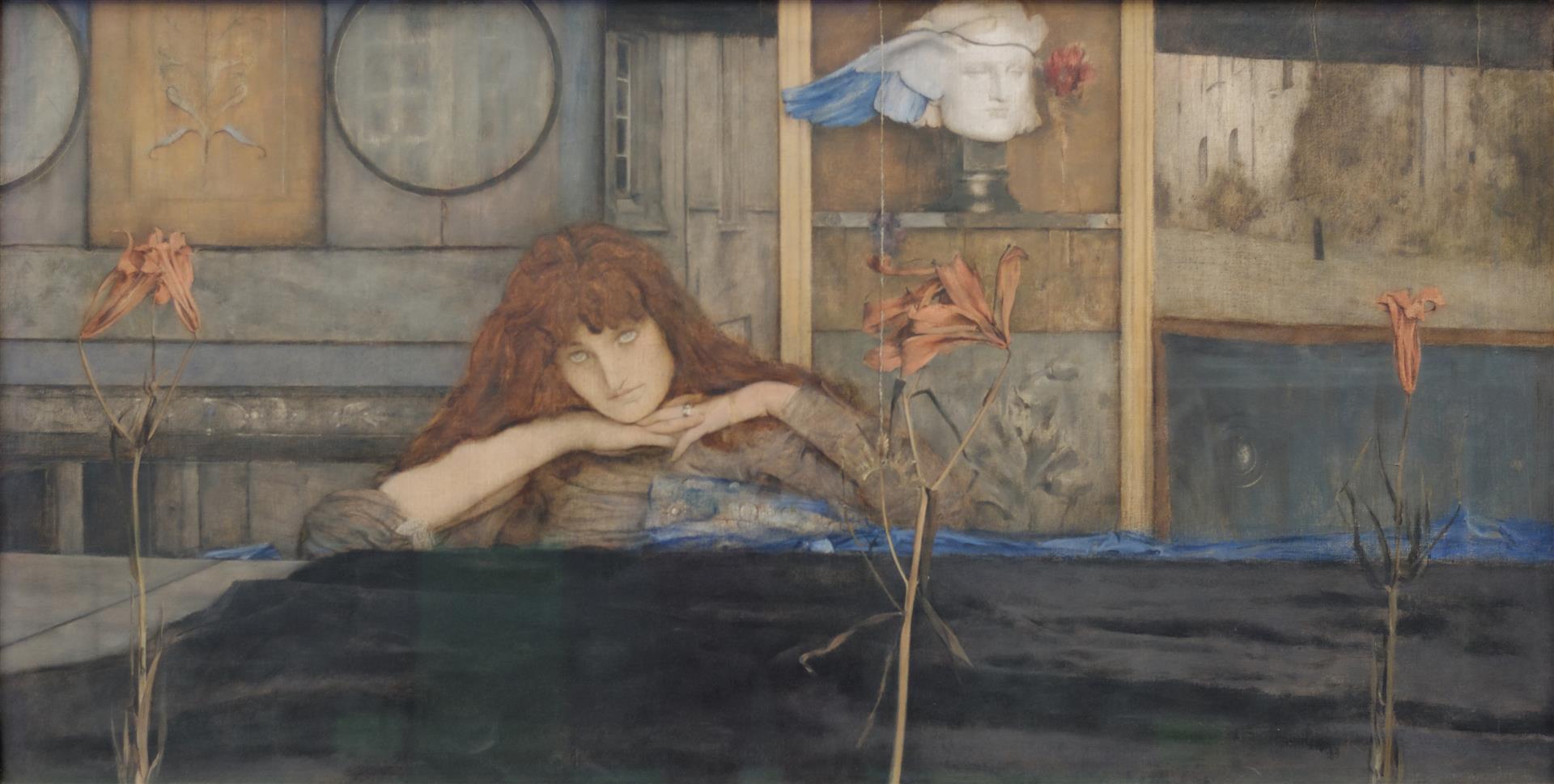
And this pre-Raphaelite Hikikomori, entitled “I lock my door upon myself”:

I lock my door

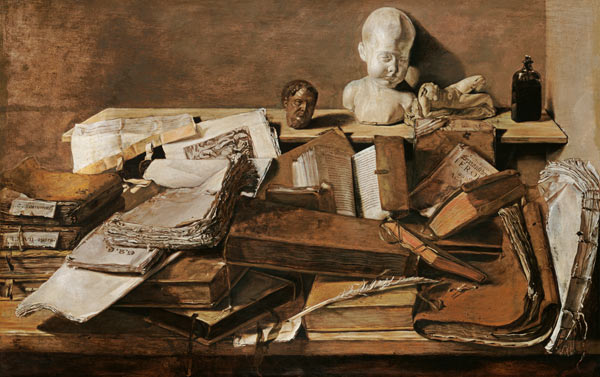
Finally, some aspirational bibliophile clutter:

Still life with books

Alte Pinakothek

Aside from the portrait of Mlle Ferrand, my visit last week to Munich’s Alte Pinakothek gallery was underwhelming. Much of it left me cold – the kind of coldness where I can’t tell how much is about the artworks themselves, how much they are just reflecting my own apathy.

Perhaps it’s because, visiting en route to a Nick Cave concert, I was primed for the melodramatic intensity of a Caravaggio or a Delacroix. Even the lashings of Christian gore — which you might expect to align with Cave — somehow felt too neat and orderly. I almost sighed with relief when I reached the one El Greco. Compared to its environment it feels brighter, bolder, larger than life:

The disrobing of Christ

It took until the 19th century for me to get a similar vibe, this time from Daumier’s Don Quixote:

Don Quixote, Daumier

And this pre-Raphaelite Hikikomori, entitled “I lock my door upon myself”:

I lock my door

Finally, some aspirational bibliophile clutter:

Still life with books

Mlle Ferrand contemplating Newton

Looking at portraits, it’s hard to wonder what the artist thought of the sitter. Here are two I saw in Munich last week, at the Alte Pinakothek:

| Maurice Quentin de la Tour
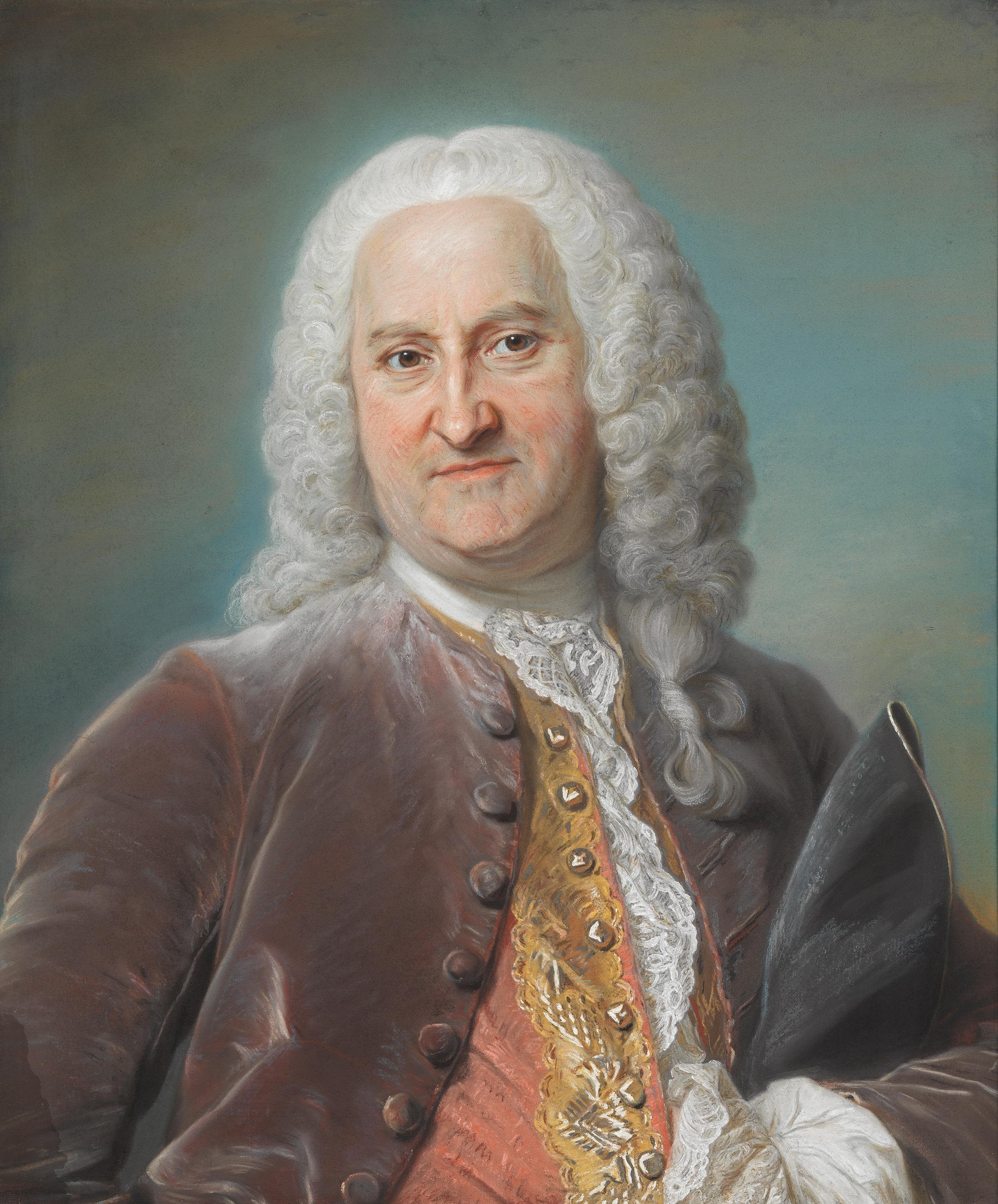
Portrait of Jean-Baptiste Philippe 1748 | Mlle Ferrand
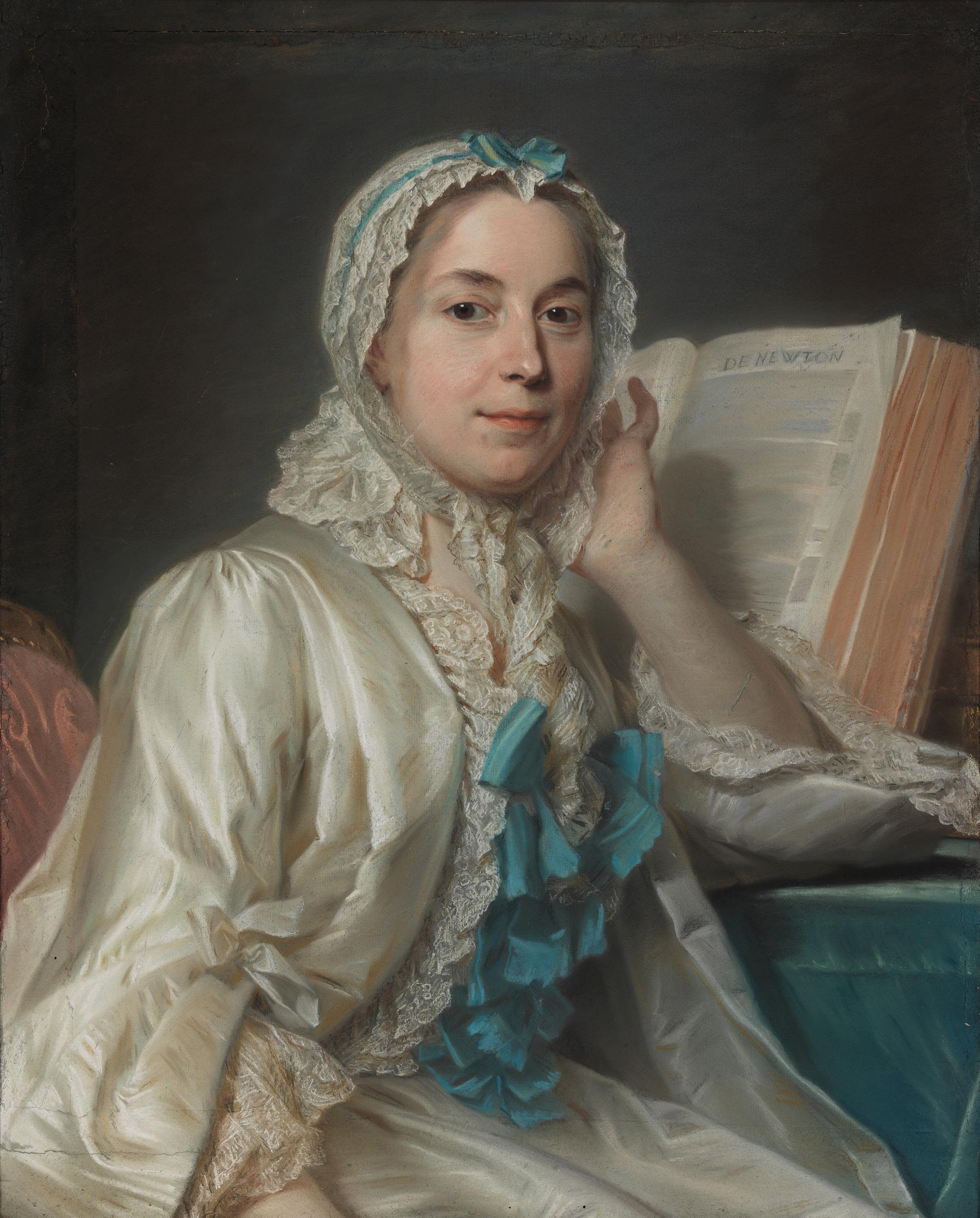
Mademoiselle Ferrand contemplates Newton, around 1752 |

These are both by Maurice Quentin de la Tour, painted a few years apart.

On the left is a retired tax collector. Did he ask to be painted with that tight-lipped sneer? I suppose it’s possible that M. Philippe preferred to be respected rather than loved.

But the portrait on the right feels a thousand times more affectionate. Mlle Ferrand is turning away from her study of Newton, almost cupping her ear to listen to the viewer.

I found a fascinating essay which gives some background:

it was commissioned by a woman who knew she was dying, and was exhibited publicly months after her death to an audience who knew exactly who she was and called her “la célèbre Mlle Ferrand”

The gallery itself understates her accomplishments

Ferrand came from an aristocratic background and was highly esteemed in scholarly circles for her mathematical and philosophical knowledge. The philosopher Étienne Bonnot de Condillac frequented her salon.

This salon was held in the rooms Ferrand shared with the Countess of Vassé. Condillac did more than frequent it – his most respected work, the ‘Treatise on Sensations’, was developed in conversation with Ferrand, who he wrote “had a greater hand in this work than I did”. The treatise, published after Ferrand’s death, is dedicated to her memory and to Vasse, in terms that go far beyond the standard flattery of a patron:

You know, Madame, to whom I am beholden for enlightenment that finally made my prejudices evaporate, you know the part played in this work by someone who was so dear to you and so worthy of your esteem and friendship. It is to her memory that I dedicate this work, and I address it to you so that I may enjoy at the same time both the delight of speaking of her and the pain of regretting her loss. Let this monument perpetuate the memory of your friendship and of the honor I had in receiving your mutual esteem.

The whole dedication is very touching, honoring Ferrand’s intellect, her personality, and the intimacy of her relationship with Madame de Vasse:

You will share this pleasure with me, Madame, you who will
forever regret her loss, and thus it is with you that I want to
speak of her. Both equally worthy of esteem, you both had the
discernment which reveals all the value of what is loved and
without which we do not know how to love at all. You knew
the principles, truth, and courage that shaped you for one
another. These qualities were the links of your friendship, and
you found in your relations that happiness characteristic of
virtuous and sensitive souls.

This happiness was then fated to end. In the final moments,
she needed no other consolation than that she would not have
to survive you. I saw that she was indeed happy about that. It
was sufficient for her to live in your memory.

Ferrand came up with the central thought experiment of the book – imagining a ‘statue’ coming to life sense by sense. She wondered how it would understand the world if it could only smell, or only taste, or only hear. I do wonder if there’s an allusion to this in the painting, with her gesture towards her ear.

But alongside all this, she was also involved in some Dumas-level royalist derring-do, hiding Bonnie Prince Charlie in her rooms.

Prince Charlie, grandson of the deposed King James II, was a hapless but dashing figure, who spent his life trying in vain to claim the throne he saw as his. This peaked with a fairly serious invasion attempt in 1745, followed by decades of successively more hopeless ventures as the prince drank and screwed his way across Europe in hiding.

And in 1749-51, he was spending a lot of time hiding with Ferrand and Vassé:

The unfortunate Prince Charles, after leaving the Bastille [really Vincennes] lay hidden for three years in Paris, in the rooms of Madame de Vassé, who then resided with her friend, the celebrated Mademoiselle Ferrand, at the convent of St. Joseph.  To Mademoiselle de Ferrand the Abbé Condillac owed the ingenious idea of the statue, which he has developed so well in his treatise on “The Sensations.”  The Princesse de Talmond, with whom Prince Charles was always much in love, inhabited the same house.  All day he was shut up in a little garderobe of Madame de Vassé’s, whence, by a secret staircase, he made his way at night to the chambers of the Princesse.  In the evening he lurked behind an alcove in the rooms of Mademoiselle Ferrand.  Thus, unseen and unknown, he enjoyed every day the conversation of the most distinguished society, and heard much good and much evil spoken of himself.

Meanwhile he was maintaining cryptic correspondence with a network of his supporters, often relying on Ferrand as a go-between. It’s surely just a coincidence that one of his primary correspondents went by the code-name ‘Newton’, matching with the book Ferrand is reading.

A biography of the prince shows a lovely overlap of thought and intrigue:

Mademoiselle Ferrand…informed him that an acquaintance had been telling Condillac that he knew the Prince’s hiding-place; the lady also advised him against certain psychological books which he wanted to buy. These, she said, were trash.

Mlle Ferrand

Let’s look again at the painting – with slightly more background, and a healthy dose of fantasy. Pausing from her study of ‘Newton’, she devises a thought experiment. How would someone experience the world, they wonder, if he could only hear and not see? Condillac sees her gesture to her ear in illustration. Charles doesn’t – the infamous fugitive, listening but not seeing, is living out the discussion.
Mlle Ferrand contemplating Newton

Looking at portraits, it’s hard to wonder what the artist thought of the sitter. Here are two I saw in Munich last week, at the Alte Pinakothek:

| Maurice Quentin de la Tour
Portrait of Jean-Baptiste Philippe 1748 | Mlle Ferrand

Mademoiselle Ferrand contemplates Newton, around 1752 |

These are both by Maurice Quentin de la Tour, painted a few years apart.

On the left is a retired tax collector. Did he ask to be painted with that tight-lipped sneer? I suppose it’s possible that M. Philippe preferred to be respected rather than loved.

But the portrait on the right feels a thousand times more affectionate. Mlle Ferrand is turning away from her study of Newton, almost cupping her ear to listen to the viewer.

I found a fascinating essay which gives some background:

it was commissioned by a woman who knew she was dying, and was exhibited publicly months after her death to an audience who knew exactly who she was and called her “la célèbre Mlle Ferrand”

The gallery itself understates her accomplishments

Ferrand came from an aristocratic background and was highly esteemed in scholarly circles for her mathematical and philosophical knowledge. The philosopher Étienne Bonnot de Condillac frequented her salon.

This salon was held in the rooms Ferrand shared with the Countess of Vassé. Condillac did more than frequent it – his most respected work, the ‘Treatise on Sensations’, was developed in conversation with Ferrand, who he wrote “had a greater hand in this work than I did”. The treatise, published after Ferrand’s death, is dedicated to her memory and to Vasse, in terms that go far beyond the standard flattery of a patron:

You know, Madame, to whom I am beholden for enlightenment that finally made my prejudices evaporate, you know the part played in this work by someone who was so dear to you and so worthy of your esteem and friendship. It is to her memory that I dedicate this work, and I address it to you so that I may enjoy at the same time both the delight of speaking of her and the pain of regretting her loss. Let this monument perpetuate the memory of your friendship and of the honor I had in receiving your mutual esteem.

The whole dedication is very touching, honoring Ferrand’s intellect, her personality, and the intimacy of her relationship with Madame de Vasse:

You will share this pleasure with me, Madame, you who will
forever regret her loss, and thus it is with you that I want to
speak of her. Both equally worthy of esteem, you both had the
discernment which reveals all the value of what is loved and
without which we do not know how to love at all. You knew
the principles, truth, and courage that shaped you for one
another. These qualities were the links of your friendship, and
you found in your relations that happiness characteristic of
virtuous and sensitive souls.

This happiness was then fated to end. In the final moments,
she needed no other consolation than that she would not have
to survive you. I saw that she was indeed happy about that. It
was sufficient for her to live in your memory.

Ferrand came up with the central thought experiment of the book – imagining a ‘statue’ coming to life sense by sense. She wondered how it would understand the world if it could only smell, or only taste, or only hear. I do wonder if there’s an allusion to this in the painting, with her gesture towards her ear.

But alongside all this, she was also involved in some Dumas-level royalist derring-do, hiding Bonnie Prince Charlie in her rooms.

Prince Charlie, grandson of the deposed King James II, was a hapless but dashing figure, who spent his life trying in vain to claim the throne he saw as his. This peaked with a fairly serious invasion attempt in 1745, followed by decades of successively more hopeless ventures as the prince drank and screwed his way across Europe in hiding.

And in 1749-51, he was spending a lot of time hiding with Ferrand and Vassé:

The unfortunate Prince Charles, after leaving the Bastille [really Vincennes] lay hidden for three years in Paris, in the rooms of Madame de Vassé, who then resided with her friend, the celebrated Mademoiselle Ferrand, at the convent of St. Joseph.  To Mademoiselle de Ferrand the Abbé Condillac owed the ingenious idea of the statue, which he has developed so well in his treatise on “The Sensations.”  The Princesse de Talmond, with whom Prince Charles was always much in love, inhabited the same house.  All day he was shut up in a little garderobe of Madame de Vassé’s, whence, by a secret staircase, he made his way at night to the chambers of the Princesse.  In the evening he lurked behind an alcove in the rooms of Mademoiselle Ferrand.  Thus, unseen and unknown, he enjoyed every day the conversation of the most distinguished society, and heard much good and much evil spoken of himself.

Meanwhile he was maintaining cryptic correspondence with a network of his supporters, often relying on Ferrand as a go-between. It’s surely just a coincidence that one of his primary correspondents went by the code-name ‘Newton’, matching with the book Ferrand is reading.

A biography of the prince shows a lovely overlap of thought and intrigue:

Mademoiselle Ferrand…informed him that an acquaintance had been telling Condillac that he knew the Prince’s hiding-place; the lady also advised him against certain psychological books which he wanted to buy. These, she said, were trash.

Mlle Ferrand

Let’s look again at the painting – with slightly more background, and a healthy dose of fantasy. Pausing from her study of ‘Newton’, she devises a thought experiment. How would someone experience the world, they wonder, if he could only hear and not see? Condillac sees her gesture to her ear in illustration. Charles doesn’t – the infamous fugitive, listening but not seeing, is living out the discussion.
My Boy Builds Coffins

My boy builds coffins with hammers and nails
He doesn't build ships, he has no use for sails
He doesn't make tables, dressers or chairs
He can't carve a whistle because he just doesn't care
    -- Florence and the Machine, "My boy builds coffins"

Carpentry is a pretty versatile skill; we haven’t yet stopped having use for wood. Not all carpenters are equally versatile. Some will turn their hands to anything. Others are like the coffin-builder, masters in one domain with no interest beyond it.

It isn’t just a matter of skill. Sure, a cabinet-maker has skills beyond those of a joiner. But if Florence’s boy went to the unemployment office, they’d push him towards, say, a job building tables. On a purely technical level, they might well be right.

Every domain has not just its own set of skills, but its own aesthetic, its own community of practice, its own motivation. If you get your joy building coffins, what’s the appeal of a chair?

The last decade of AI progress has wiped out any number of academic and creative niches. Decades of work in Natural Language Processing, for instance, is obsolete because GPT can do it better.

Progress tends to merge existing disciplines into a blob, before eventually spawning new offshoots. In the aftermath of a big paradigm shift like this, a few naive techniques beat the state of the art across many disciplines. Ten years from now, various areas will have learned how to layer their own skills on top of the basics. And with that, specialization and communities of practice will re-emerge, albeit not in quite the same constellations as before.

I’m writing this as somebody whose expertise has not been made obsolete by AI – I avoid that simply by not having such deep expertise in the first place! Yet even vicariously I feel a certain amount of grief for the work and skill confined to history. And even when that is a shared experience – I’m not aware of any cultural structure to recognize and channel that grief.

My Boy Builds Coffins

My boy builds coffins with hammers and nails
He doesn't build ships, he has no use for sails
He doesn't make tables, dressers or chairs
He can't carve a whistle because he just doesn't care
    -- Florence and the Machine, "My boy builds coffins"

Carpentry is a pretty versatile skill; we haven’t yet stopped having use for wood. Not all carpenters are equally versatile. Some will turn their hands to anything. Others are like the coffin-builder, masters in one domain with no interest beyond it.

It isn’t just a matter of skill. Sure, a cabinet-maker has skills beyond those of a joiner. But if Florence’s boy went to the unemployment office, they’d push him towards, say, a job building tables. On a purely technical level, they might well be right.

Every domain has not just its own set of skills, but its own aesthetic, its own community of practice, its own motivation. If you get your joy building coffins, what’s the appeal of a chair?

The last decade of AI progress has wiped out any number of academic and creative niches. Decades of work in Natural Language Processing, for instance, is obsolete because GPT can do it better.

Progress tends to merge existing disciplines into a blob, before eventually spawning new offshoots. In the aftermath of a big paradigm shift like this, a few naive techniques beat the state of the art across many disciplines. Ten years from now, various areas will have learned how to layer their own skills on top of the basics. And with that, specialization and communities of practice will re-emerge, albeit not in quite the same constellations as before.

I’m writing this as somebody whose expertise has not been made obsolete by AI – I avoid that simply by not having such deep expertise in the first place! Yet even vicariously I feel a certain amount of grief for the work and skill confined to history. And even when that is a shared experience – I’m not aware of any cultural structure to recognize and channel that grief.

Quickly choosing software libraries

One of the rarely-made-explicit skills of a developer is choosing a software library for some task. Just now, I realised I’ve built up some habits of how I do this, without ever making it explicit. Here’s what I’m generally doing:
– find one package that does the job. perhaps by straight-up googling for it, perhaps by checking stackoverflow
– search Hacker News discussions about it, using duckduckgo’s ‘!hn’ bang command. Here I’m trying to get a general idea of how people see this library, how alive it is, and especially what people are using instead. I’m looking through
– top-ranked posts: generally the launch and major releases, sometimes somebody complaining about it
– top-ranked posts from the last year: gives me a sense of the direction. Quite often you’ll find a low-comment post asking ‘what’s up with X?’, and somebody in the comments saying ‘we’re all using Y instead’
– comments: will generally turn up some where the library is one of a list of options (try X or Y or Z), or where somebody is arguing when/when not to use it
– Through this I build up a list of maybe 2-4 libraries in the same area, and an idea of how they are seen. Then for each of them, check:
– the homepage, especially the quickstart tutorial
– github, or wherever the code is. number of stars/forks, maybe glance at the open issues
– Try the most-promising looking one. If I hit a roadblock, go back and look at number 2

In most areas, this is sufficient to quickly find a ‘good enough’ solution. Then I can forget about it, and focus on the 10% of cases where I need to have higher standards

Quickly choosing software libraries

One of the rarely-made-explicit skills of a developer is choosing a software library for some task. Just now, I realised I’ve built up some habits of how I do this, without ever making it explicit. Here’s what I’m generally doing:
– find one package that does the job. perhaps by straight-up googling for it, perhaps by checking stackoverflow
– search Hacker News discussions about it, using duckduckgo’s ‘!hn’ bang command. Here I’m trying to get a general idea of how people see this library, how alive it is, and especially what people are using instead. I’m looking through
– top-ranked posts: generally the launch and major releases, sometimes somebody complaining about it
– top-ranked posts from the last year: gives me a sense of the direction. Quite often you’ll find a low-comment post asking ‘what’s up with X?’, and somebody in the comments saying ‘we’re all using Y instead’
– comments: will generally turn up some where the library is one of a list of options (try X or Y or Z), or where somebody is arguing when/when not to use it
– Through this I build up a list of maybe 2-4 libraries in the same area, and an idea of how they are seen. Then for each of them, check:
– the homepage, especially the quickstart tutorial
– github, or wherever the code is. number of stars/forks, maybe glance at the open issues
– Try the most-promising looking one. If I hit a roadblock, go back and look at number 2

In most areas, this is sufficient to quickly find a ‘good enough’ solution. Then I can forget about it, and focus on the 10% of cases where I need to have higher standards

Command Palette Shortcuts

Quick reference for myself: the shortcut to open the command palette (aka heads-up display) in various programs:
– intellij idea: C-S-a
– VS Code: C-S-p
– obsidian: C-p
– KDE: M-
– Github: C-k
– Libreoffice: S-

Not yet implemented (but coming): kate, krita

Background: The command palette is my favourite UI innovation of recent years, one I already find it hard to live without. One shortcut brings up a searchable list of commands, which permanently removes the hassle of browsing through menus. But every program has chosen its own shortcut to bring up the palette, and I find them hard to remember. Hence this cheat-sheet

[shortcuts are listed emacs-style: M is alt, C is ctrl, S is shift]

Command Palette Shortcuts

Quick reference for myself: the shortcut to open the command palette (aka heads-up display) in various programs:
– intellij idea: C-S-a
– VS Code: C-S-p
– obsidian: C-p
– KDE: M-
– Github: C-k
– Libreoffice: S-

Not yet implemented (but coming): kate, krita

Background: The command palette is my favourite UI innovation of recent years, one I already find it hard to live without. One shortcut brings up a searchable list of commands, which permanently removes the hassle of browsing through menus. But every program has chosen its own shortcut to bring up the palette, and I find them hard to remember. Hence this cheat-sheet

[shortcuts are listed emacs-style: M is alt, C is ctrl, S is shift]